Community
Economic Benefits
Investment that benefits communities
A well-planned data center should create lasting value for its host community. Our approach brings together a broader tax base, opportunities for workers and businesses, and benefits residents can help shape.
Community Benefits are defined for each project through community engagement and public commitments.

A broader tax base to fund local services
New taxable investment will generate substantial recurring revenue for local taxing jurisdictions. That revenue supports the facilities, infrastructure and services residents rely on, with spending decisions made through the appropriate public budgets.
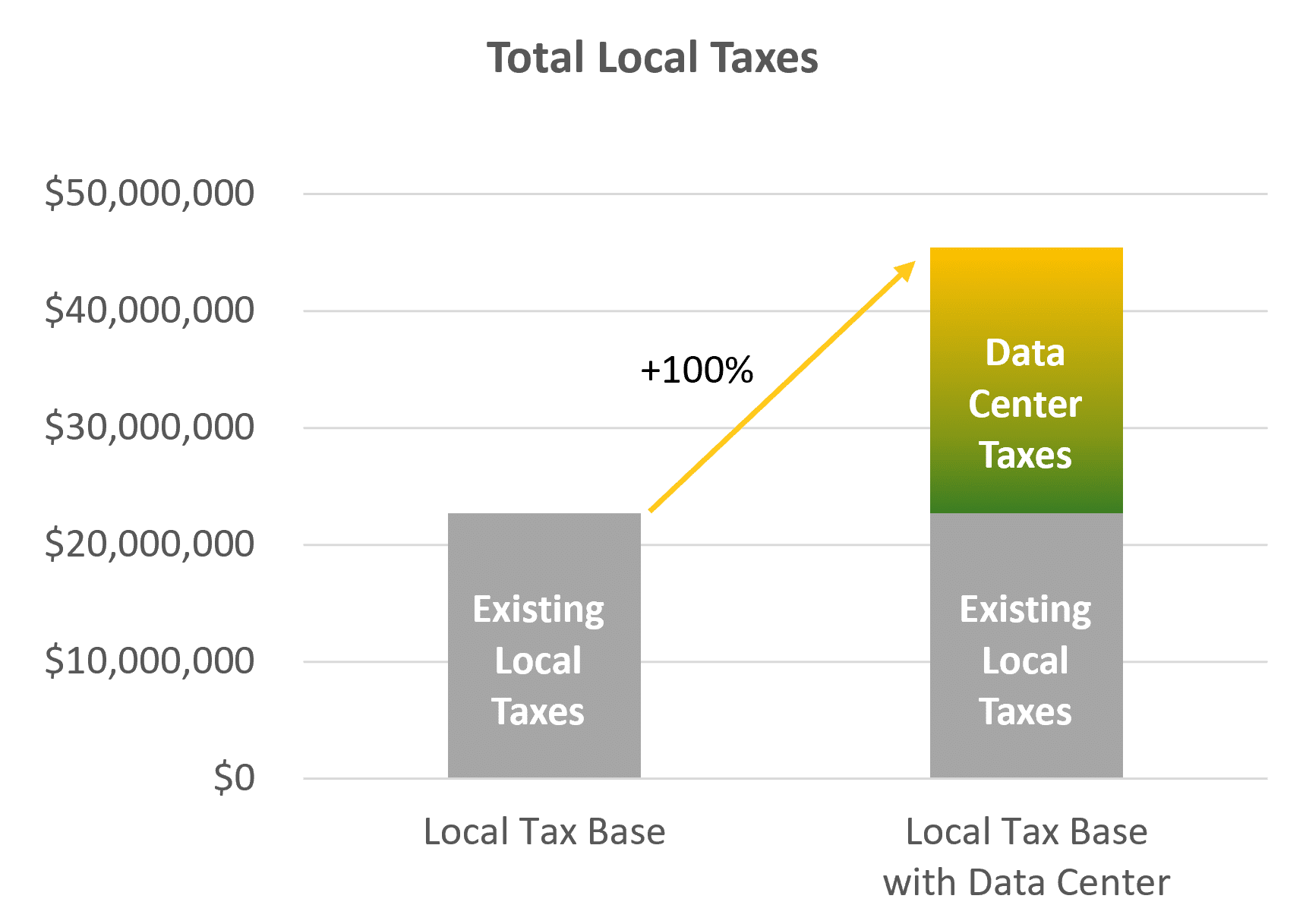
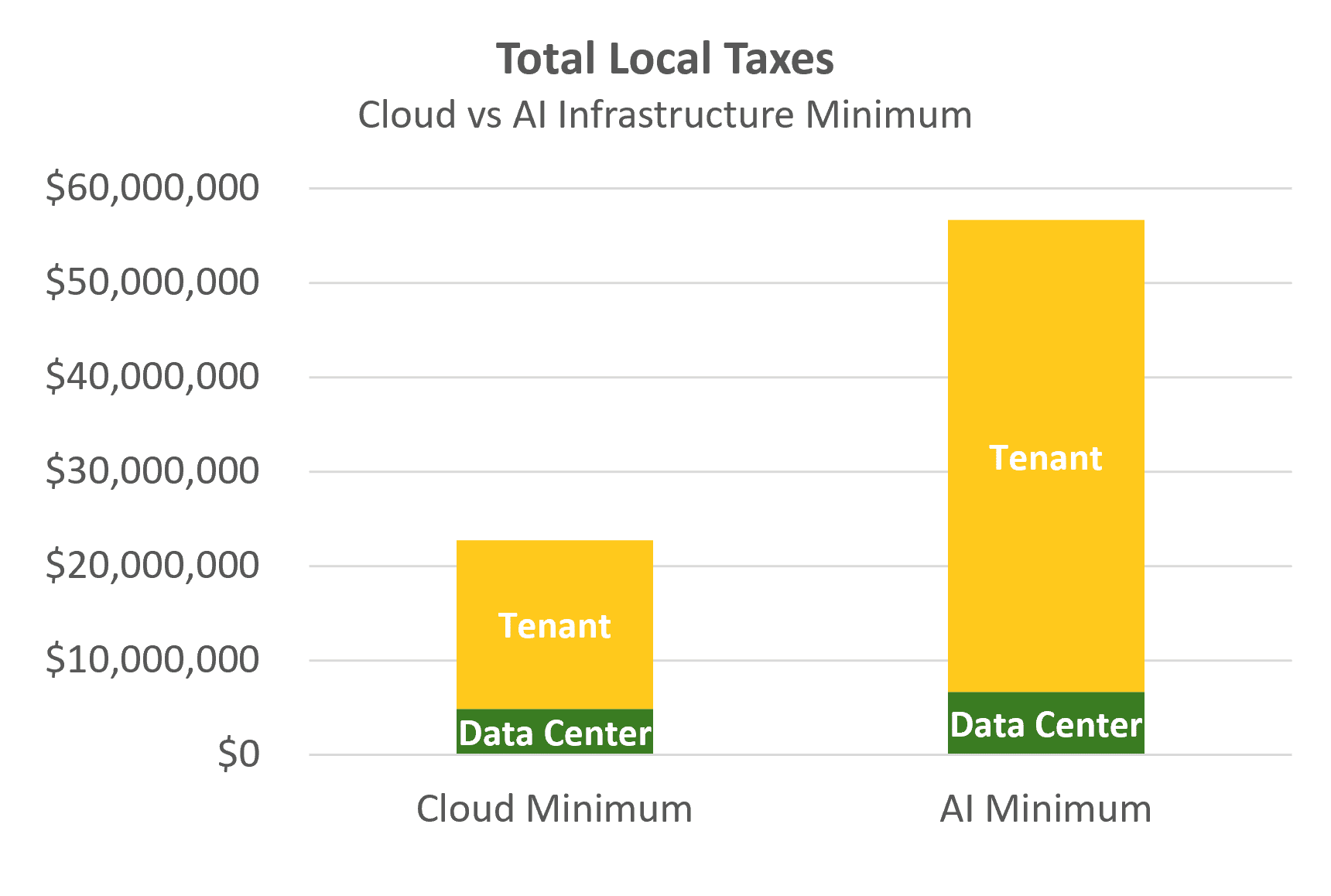
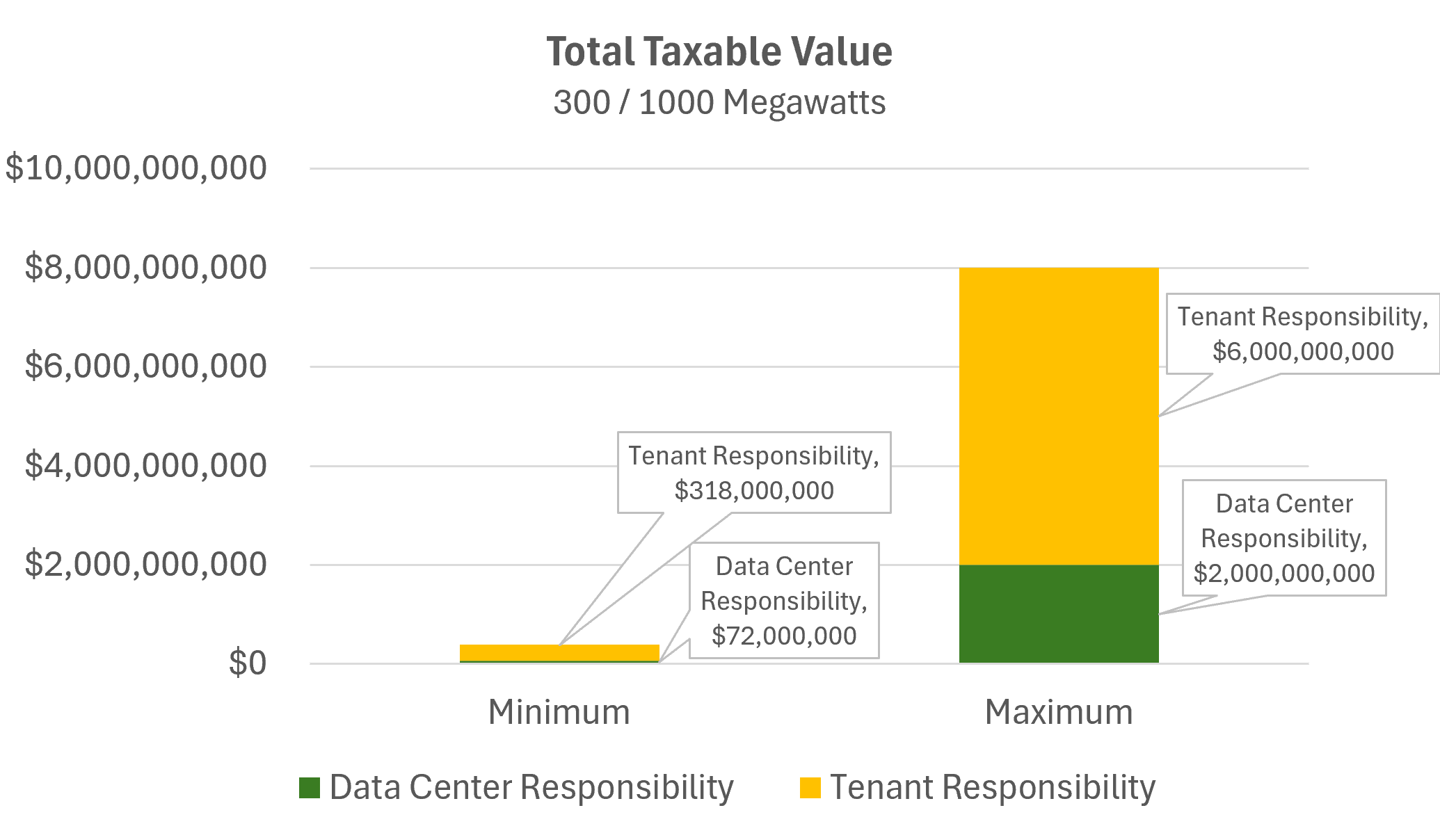
Minimum and maximum projected taxable value. The amounts reflect cloud and AI equipment investment cost differences, final technical design attributes, and typical phased expansion from 300 megawatts to 1,000 megawatts over time. Data center/Tenant splits vary depending upon scopes; minimum/maximum scenarios assume the data center builds a powered shell/turnkey facilities, respectively (totals would be unchanged).

Opportunities for local workers and businesses
Construction and ongoing operations create different kinds of work. Our goal is to connect potential opportunities with local trades, suppliers, and service businesses as project plans develop.
Residents should be able to distinguish construction jobs from permanent operating roles, see the assumptions behind job estimates, and understand how local businesses could participate.
Local opportunity should be described in practical terms: the work involved, the skills needed, and how to get involved.
Practical ways for households to share in the benefits
Community benefit programs can include residential solar or other energy initiatives. The right approach depends on each project and the needs residents identify.
Any household offer should explain eligibility, installation costs, ownership, maintenance, and how expected savings are calculated, so residents can assess the offer before deciding whether to participate.
Available benefits and actual savings would depend on each project’s agreements and household conditions.

Residents should help set the priorities
Our approach calls for substantial, recurring community benefits in addition to tax revenue. Residents should help identify the priorities, including education, healthcare, public services, and other local needs.
Any final commitments must be specific, publicly available, and enforceable through agreements with local government. Once a project is announced, results are reported on its location page so residents can see whether commitments are being kept.
If a project cannot meet our commitments, we walk away.
Questions about economic benefits
These answers also appear on Common Concerns, under Jobs and benefits.
Are the job numbers realistic?
Job numbers depend on the size of the campus and how it is built out. Construction employs the most people, over several years. Operations jobs are fewer and long-term. Construction and permanent roles are reported separately, with the assumptions behind each estimate. A campus also adds to the local tax base, and we invest in training and digital skills programs where we work. Expected job numbers for a specific site are part of its public approval process.
Do the benefits last, or are they one-time?
We secure community benefits through the strongest binding agreement each community allows, and we structure them to last beyond our involvement. Each project spells out which agreements apply and who they bind.
Is this even needed?
Whether the national build-out is overstated is a fair debate, and it is separate from what we commit to locally. The community protections and benefits, water safeguards, rate protections, tax base and binding agreements hold no matter how the technology cycle plays out. We ask to be judged on enforceable local terms.
Would a larger tax base lower my property-tax bill?
Not automatically. A larger tax base does not by itself guarantee a lower household tax bill. Tax rates, public budgets and state rules also matter. We explain projected public revenue separately from any household savings.
Who decides how tax revenue and community benefits are used?
Public bodies decide how tax revenue is used through their budgets. Separately, residents help set priorities for community benefits, and final commitments are made public and enforceable.
What would meaningful economic benefit look like?
Tell us what would make a difference for a household, a neighborhood, or a community. You do not need to support a data center to ask questions or take part in a conversation.