Environmental Design
Acoustic Noise
Quiet by Design
Neighborhoods should not be impacted by industrial sound. No noise pollution is non-negotiable for us. That's why every project is planned around quiet from day one: fewer noisy systems on site, large setbacks from nearby homes, building layouts that direct sound away from residential areas, and natural green buffers built into the site plan.
No Noise Pollution.
Our goal is to meet or exceed local noise limits at the property line. We require a noise study before construction, and boundary testing to confirm performance once the site is operating. Results can be shared publicly so residents and local officials can see whether the site is meeting its commitments.
If noise ever exceeds the agreed standard, local governments have established clear paths to require and enforce corrective action over the life of the project.

How Data Center Noise Can Be Controlled and Enforced
Noise protection should not depend on promises or predictions alone. It should start with real measurements, rely on proven design, and include standards that local government can test and enforce.
A responsible noise program should measure existing sound levels, set community-based limits, control ordinary and low-frequency sound through design, require equipment performance guarantees, independently test the completed facility, and give local officials clear remedies if standards are not met.
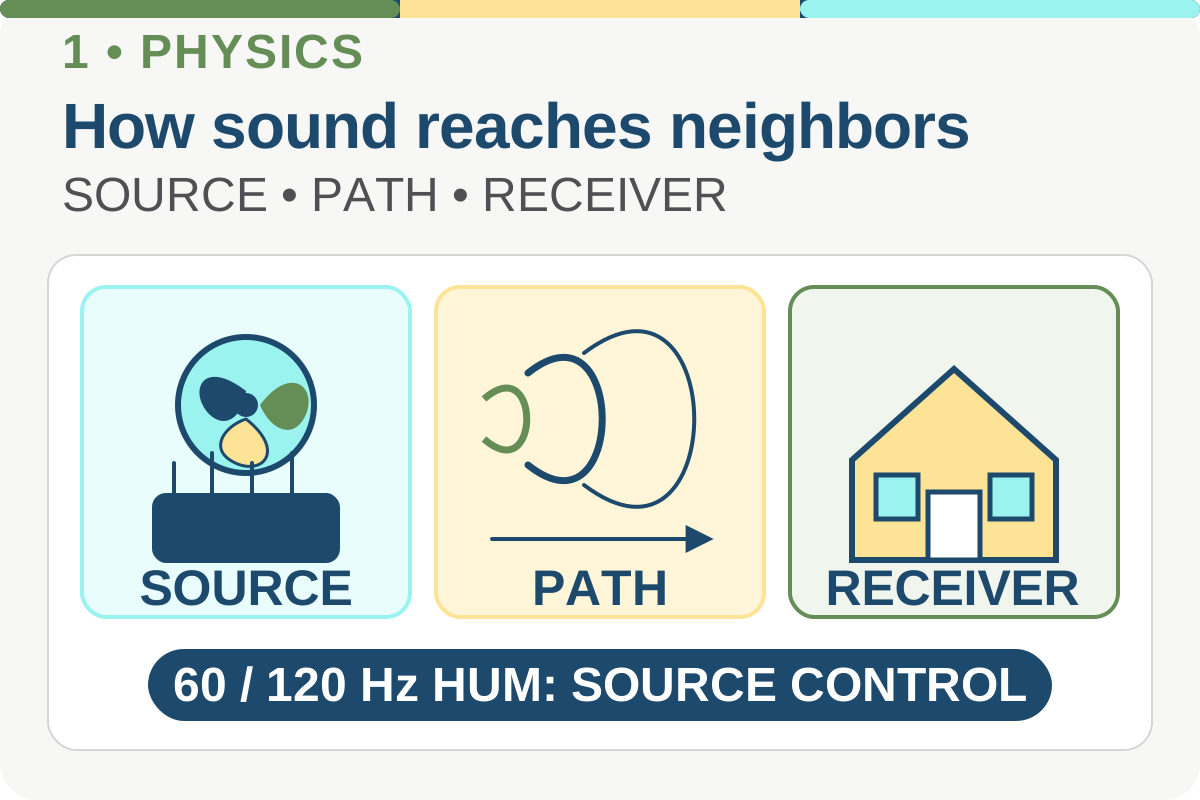
Sound is energy. Fans, transformers, pumps and other equipment all contribute to the total.
Several important rules apply:
Sound from multiple sources combines logarithmically.
Greater distance normally reduces sound.
Buildings, enclosures and barriers can interrupt sound paths.
Low-frequency sound is harder to contain than higher-frequency sound.
Transformer hum commonly includes 120 Hz and higher harmonics. A separate 60 Hz component can indicate another electrical, mechanical or structural source.
That is why overall dBA and low-frequency hum must be evaluated separately.
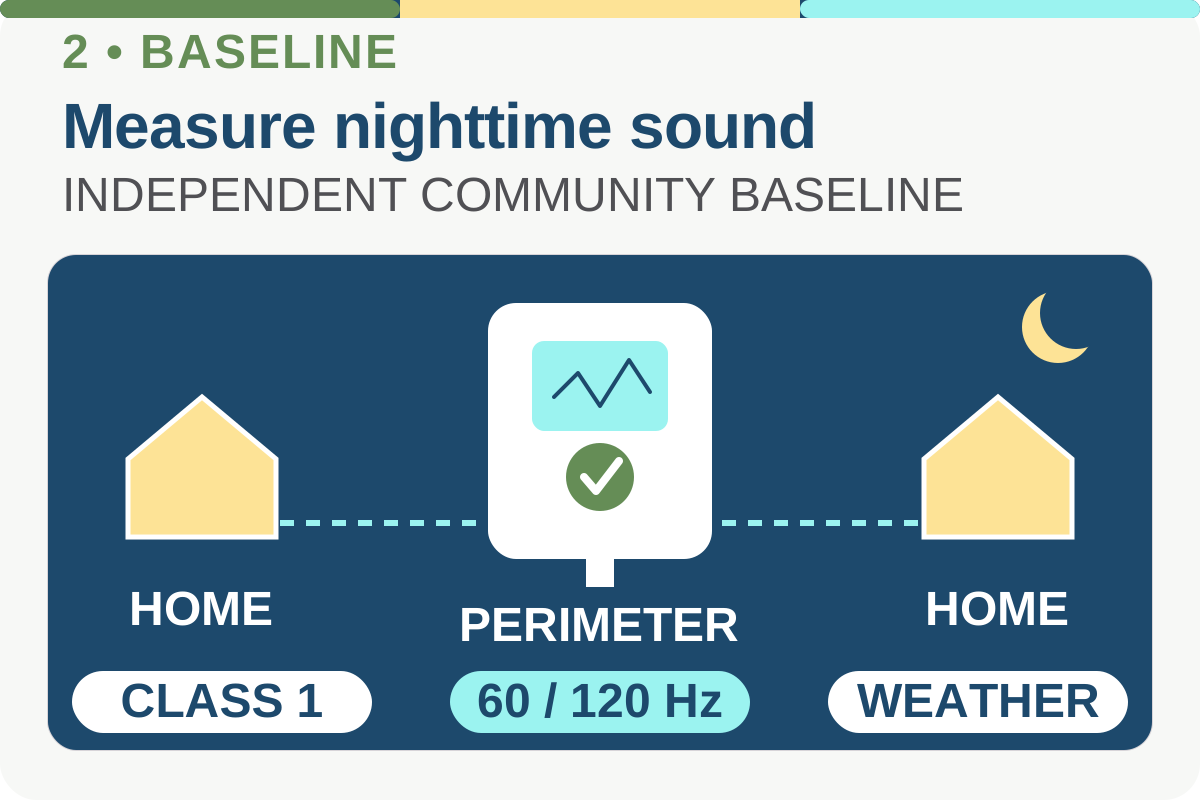
Before final design, an independent acoustic consultant should measure the existing community sound environment.
Measurements should include:
Nighttime sound at the property perimeter and nearby homes.
Ordinary A-weighted sound levels.
Low-frequency and narrowband measurements.
Specific evaluation of 60 Hz, 120 Hz and related harmonics.
Weather and nearby sound sources during each measurement.
The consultant’s methods, assumptions, data and results should be available for professional peer review.
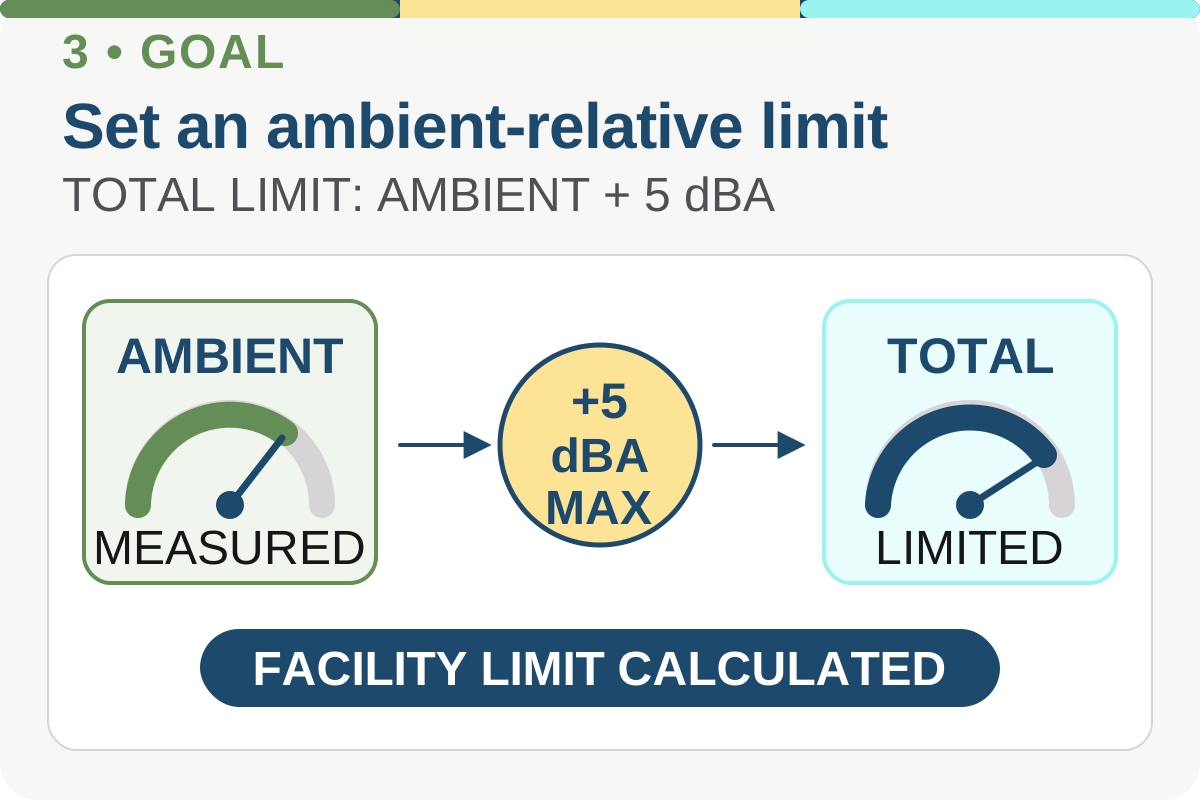
The proposed discussion goal is straightforward: the combined post-project sound level should not exceed the independently measured ambient level by more than 5 dBA at any controlling perimeter location.
Because decibels combine logarithmically, the project’s facility-only allowance must be calculated from the measured ambient. It is not simply the ambient level plus 5 dBA.
The project should also meet separate requirements for:
Prominent tones.
Low-frequency sound.
60/120 Hz hum and harmonics.
Normal nighttime operation.
The worst normal combination of operating equipment.
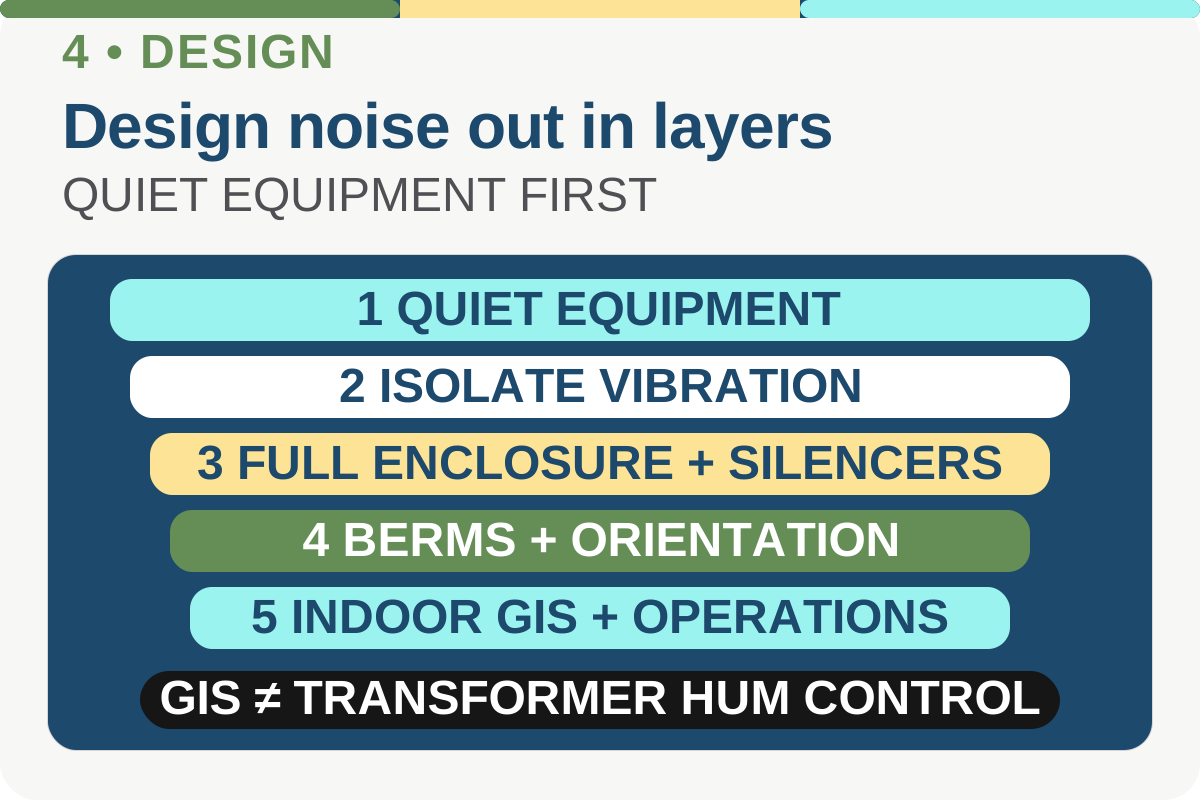
The most effective approach is to control noise before it leaves the equipment.
Designs should consider:
Guaranteed low-sound transformers, fans, pumps and cooling equipment.
Large, low-speed fans and quieter nighttime operating modes.
Full acoustic buildings or close-fitting equipment enclosures.
Indoor gas-insulated switchgear, or GIS, where appropriate.
Low-frequency-tuned intake and exhaust silencers.
Vibration isolation and flexible structural connections.
Heavy walls, earth berms and intervening buildings.
Equipment orientation that directs openings away from homes.
Sealed doors, penetrations and service openings.
Acoustic treatment of ventilation and required pressure-relief paths.
GIS can reduce exposed switchgear and bus equipment, but it does not eliminate transformer, reactor, fan, pump or building-ventilation noise. The complete electrical building must be evaluated as one acoustic system.
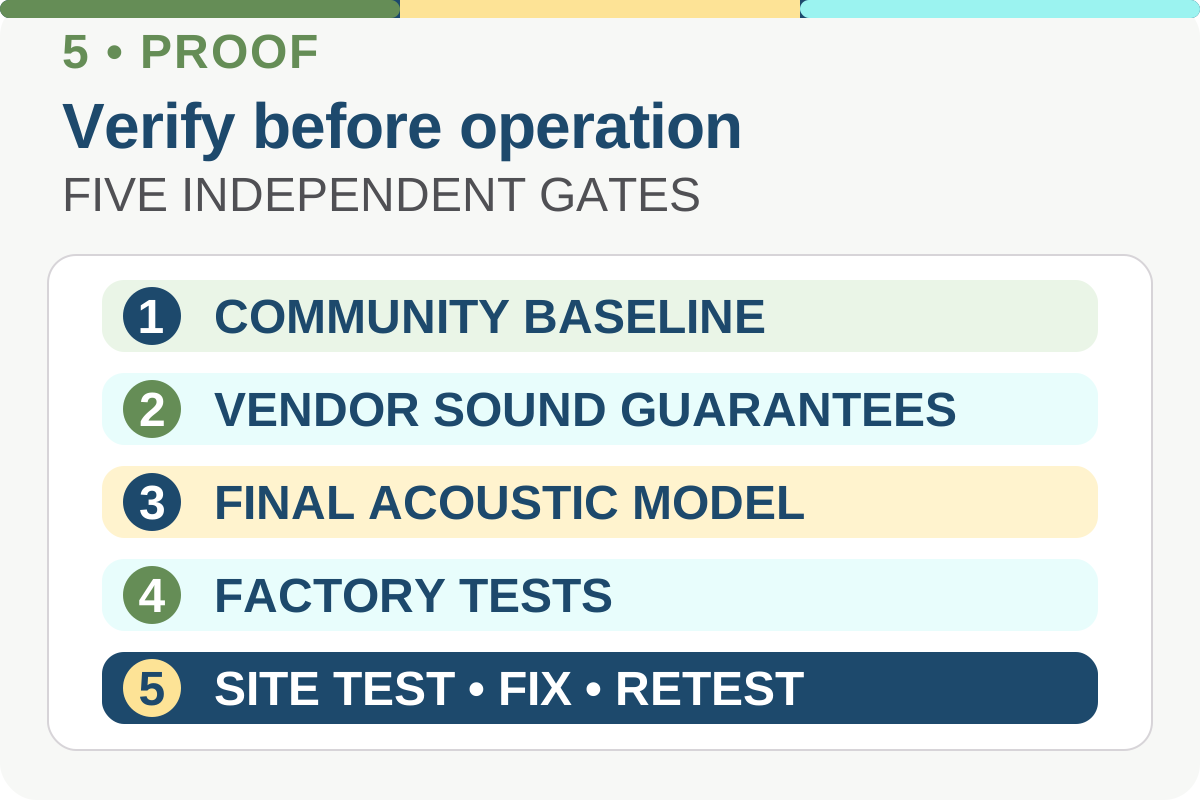
The design should pass several independent verification steps:
Step 1 — Baseline measurements
An independent consultant establishes existing ambient and low-frequency conditions.
Step 2 — Equipment guarantees
Manufacturers provide binding octave-band and narrowband sound-power guarantees for transformers, fans, pumps, reactors and ventilation equipment.
Step 3 — Final acoustic model
A detailed model evaluates every significant source, building opening, enclosure, barrier and community receptor.
Step 4 — Factory testing
Major transformers and mechanical equipment are tested before delivery to verify their guaranteed sound levels.
Step 5 — Site commissioning
The completed facility is tested under the worst normal operating condition before unrestricted operation begins.
If the project does not pass, additional mitigation should be installed and the testing repeated.
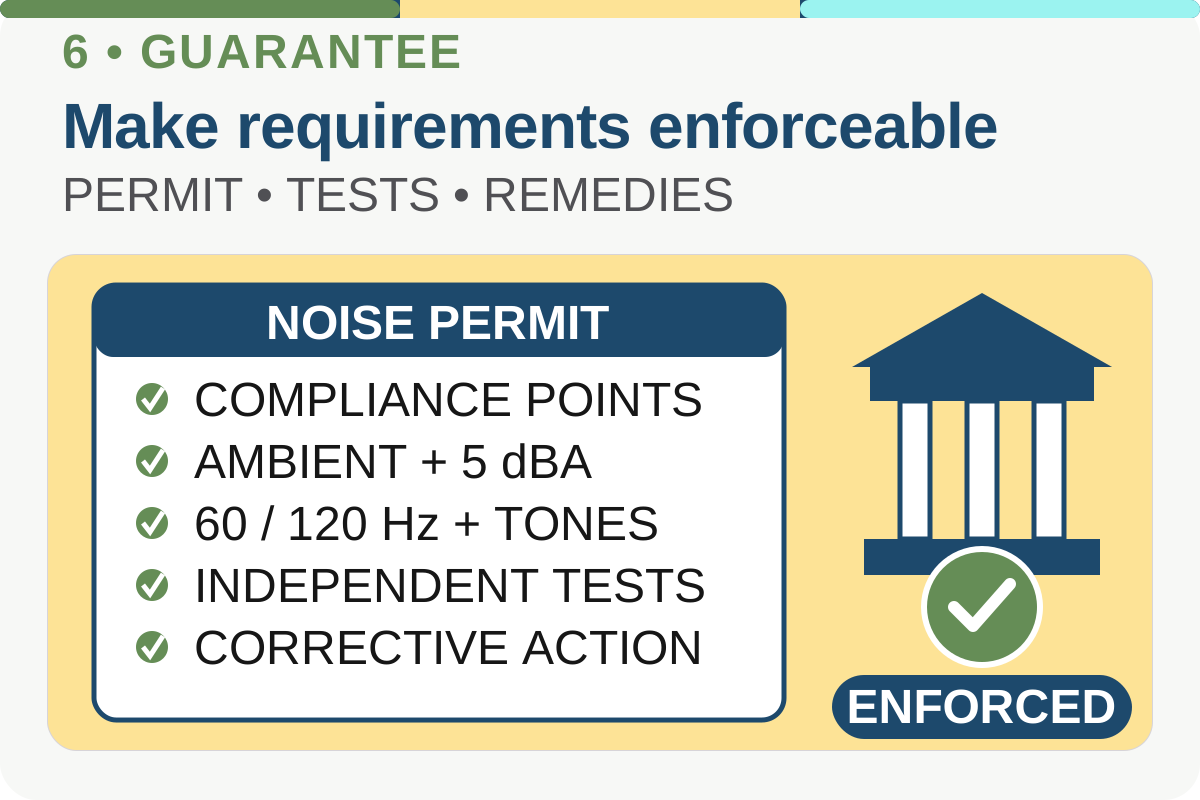
A noise promise becomes enforceable when it is written into the project approvals using measurable requirements.
The local government can require:
Defined compliance locations.
An ambient-relative limit of no more than +5 dBA.
A facility-only design budget derived from the measured ambient.
Separate tonal and low-frequency limits.
Explicit treatment of 60 Hz, 120 Hz and important harmonics.
Testing during the worst normal operating condition.
Independent baseline and compliance testing.
Publicly reviewable reports and supporting results.
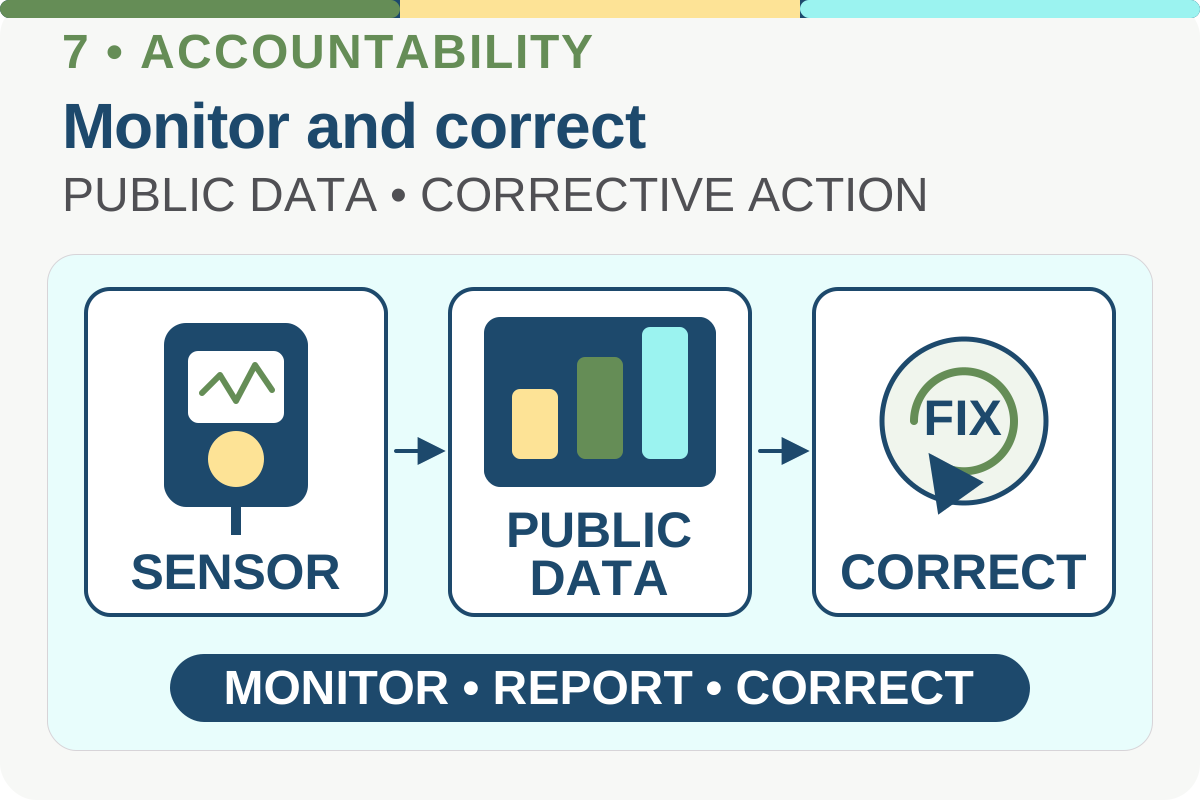
Permanent monitoring at controlling perimeter locations.
Mandatory corrective action when a limit is exceeded.
Operating restrictions until a documented exceedance is corrected.
New modeling and testing after material equipment or operating changes.
These conditions turn an estimate into a measurable performance obligation.
Noise management should continue throughout facility operation.
A long-term program should include:
Permanent perimeter monitoring.
Periodic independent audits.
Public reporting of verified results.
A documented community complaint process.
Defined response and investigation deadlines.
Source-by-source diagnostic testing when hum is reported.
Corrective-action plans and follow-up measurements.
Retesting after major equipment replacements or expansions.